
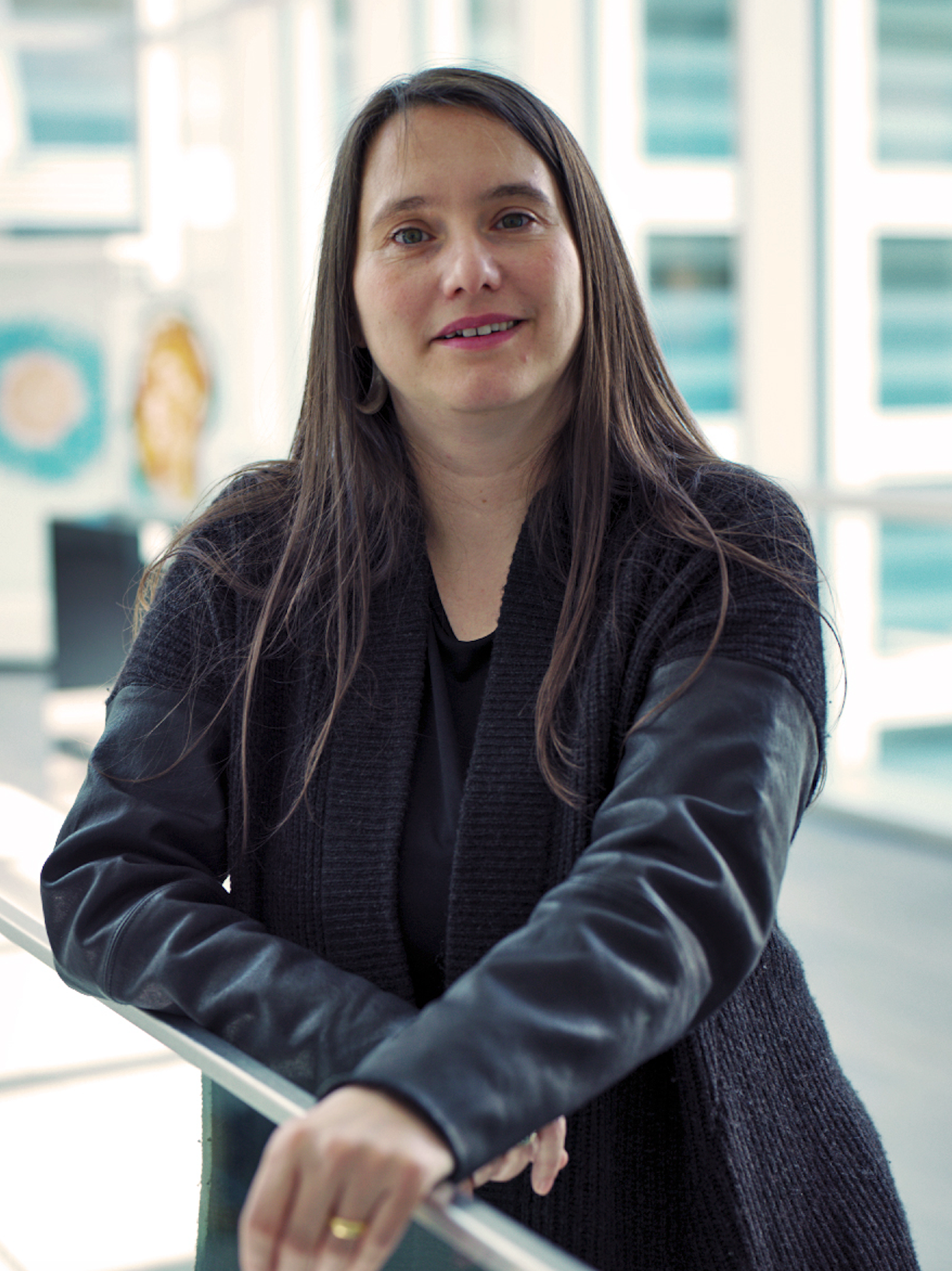
Dr. Roll-Mecak is the Senior Investigator and Chief of the Unit of Cell Biology and Biophysics at the National Institutes of Health, U.S.A. She holds appointments in the National Institute of Neurological Disorders and Stroke and the Biophysics Center of the National Heart, Lung and Blood Institute. She received her undergraduate degree in Chemical Engineering from The Cooper Union in New York City and her Ph.D. in Molecular Biophysics from the Rockefeller University where she worked on translation initiation. As a Damon Runyon postdoctoral fellow with Ron Vale at the University of California, San Francisco she identified a new microtubule-severing enzyme and shed light on its mechanism of action. She joined the National Institutes of Health in 2010 as head of the Unit of Cell Biology and Biophysics. Her aim is to uncover the molecular basis for cytoskeleton function. Two main thrusts are to elucidate how cells encode, through the tubulin code, temporal and spatial information in their microtubules and regulate complex cytoarchitecture, and to understand how enzymes catalyze microtubule polymer repair and rejuvenation.Dr. Roll-Mecak is the recipient of numerous awards, including a Burroughs Wellcome Career Award, a Searle Scholar Award, the 2015 Margaret Dayhoff Award from the Biophysical Society and she was the 2017 Keith R. Porter fellow of the American Society of Cell Biology. In 2022 she received a NIH Director’s Challenge Innovation grant to generate a 4D Map of the tubulin code in the human neuron. In 2023 she was the recipient of the International Prize from the Biochemical Society and the NINDS award for mentoring junior faculty, and in 2025 she was recognized with the Hans Neurath Award from the Protein Society.
Abstract
Our every movement and thought is brought about by a complex network of neuronal connections precisely patterned through the dynamic organization of the microtubule cytoskeleton. Even subtle perturbation in microtubule regulation leads to cognitive and behavioral deficits. Neuronal processes contain bundles of microtubules that serve as tracks for the large volume of bidirectional cellular traffic necessary for efficient communication between distant neuronal compartments. Molecular motors functioning in this crowded environment encounter a dense mesh of microtubule associated proteins (MAPs) and intrinsically disordered tubulin tails that are modified with abundant and chemically diverse posttranslational modifications. My talk will take a journey across scales, starting from the atomic structure and mechanism of tubulin code writers and erasers and their interplay to generate complex modification patterns, to the visualization of microtubule architecture in situ in the human axon and the elucidation of molecular mechanisms of processive and selective cargo transport that arise at the intersection of these two regulatory layers of tubulin modifications and MAPs. By closely integrating imaging-driven in vivo physiological discovery with complex in vitro reconstitution and bridging these approaches through new chemical biology tools we developed, my lab aims to achieve a multiscale understanding of cytoarchitecture development and adaptation.